As a fractional HR consultant at Career Contacts, I often encounter employees and employers uncertain about how to handle performance reviews during long-term leave. Whether it’s parental leave, medical leave, or other extended absences, ensuring that your performance is evaluated fairly and comprehensively can significantly impact your ongoing career success. If you’re planning to take long-term leave this year, it’s essential to address how your company will manage your performance review in your absence. Key Questions to Address Before Taking Long-Term Leave: Will You Miss Your Performance Review? Long-term leave often coincides with the time when annual or bi-annual performance reviews are conducted. If you’re not present for the review, it’s essential to understand whether the review will be postponed, skipped, or conducted in your absence. Missing out on this crucial feedback session can leave you without valuable insights into your performance and areas for improvement. How Will Your Performance Be Evaluated? Evaluation criteria can become complex when an employee is on long-term leave. It’s important to clarify with your employer how your performance will be assessed during this period. Will they consider the work you’ve done up until your leave? Will there be any adjustments or special considerations given …
The “No Update” Update – Revising Your Recruitment Process
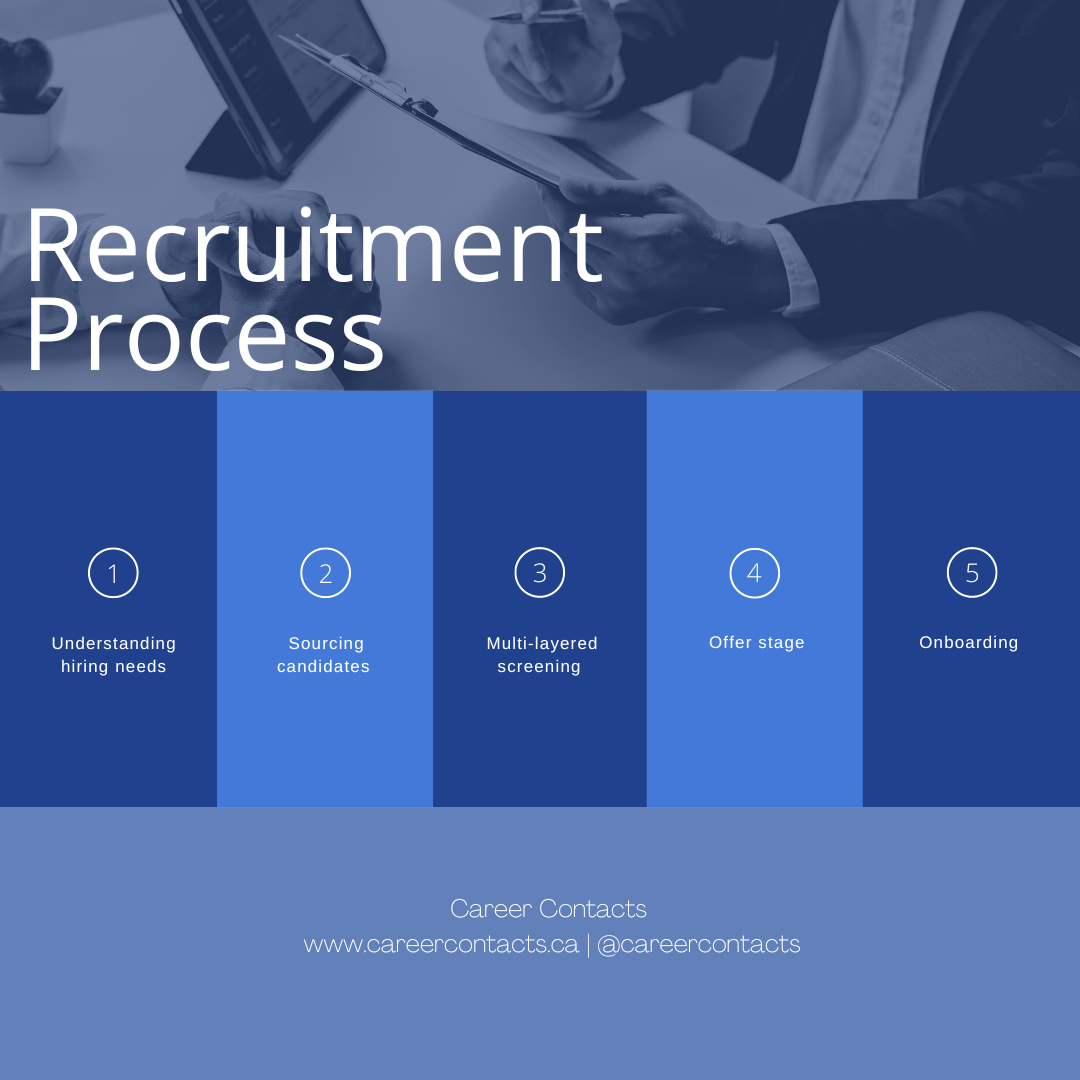
If you spend any time at all on LinkedIn, you have seen the barrage of candidates who continue to feel ghosted in the recruitment process. They spend hours of their time and energy to research and apply to positions only to get nothing in return. In a recruitment firm, the goal is to keep candidates informed as much as possible on the progression of a recruit. The challenge for recruitment professionals is that because they work on behalf of a client, there are so many parts of the process that are out of their control. This is not an excuse. LinkedIn has a lot of stories that point fingers at candidates for ghosting too – this isn’t an excuse either. That’s why at Career Contacts we are passionate about setting up our clients and our candidates for success by guiding them step by step through the hiring process. We believe that with the right steps in place, the recruitment process can be a positive and rewarding experience for everyone, from start to finish. Step 1: Don’t start until you are ready In order to keep your timelines candidate-centered, ensure that you have all your internal processes sorted before posting the …
WFH vs WFO* – How to Decide Which is Best For You
*Work from home (WFH) vs Work from office (WFO) As the world begins to transition into our new reality in the aftermath of the pandemic, employers and employees alike are being faced with the question – should we go back to the office? Many companies have begun allowing room for dialogue to open up the possibility of letting staff decide for themselves which they prefer. If your workplace has started hashing out this discussion, then you know that this debate is fraught with pros and cons. So how do you decide? Career Contacts is here to help! We’ve compiled some key factors to consider as you weigh your options, and we’ve provided an interactive checklist to help you make the best call for your current lifestyle. WFH vs WFO – How to decide which is best for you Here are some aspects to think about: Commute Commuting is perhaps one of the most widely deliberated topics when discussing the pros and cons of WFH vs WFO. Depending on how far you live from your workplace, and how strenuous the drive or transit is, commuting may be one of the biggest factors that you consider when deciding where you want to …
Returning to the Office (Post-Pandemic)
The past year and a half has been an unprecedented time in the world and that includes in the workplace. Most companies never thought it was possible to do what they do from home, and have spent time and resources to support a safe working environment, while ensuring business continuity. As companies begin to discuss bringing employees back to the office, employers may be feeling apprehensive about how to transition their team back into the workplace in a way that is safe and considerate to their employees. If you are wondering how to ensure you are keeping your employees in mind during this transition, you are already hitting our number one recommendation – talk to your employees! Here are some additional insights on how to do just that: Start by taking a look at your company’s policies and consider if any of them need to be re-written to better suit the current state of workplace environments post-pandemic. Because the landscape of the work world has continued to change so dramatically over the course of even just the past few months, this may be a good time to review your workplace’s safety/sanitation, clocking in/out, dress code policies etc. and reintroduce them …
Challenging Stigma: Mental Health in the Workplace
We at Career Contacts are proud advocates of mental health awareness and wellbeing in the workplace, so in recognition of May being Mental Health Awareness Month, we’ve compiled some useful information that can help facilitate a dialogue around mental health in the office. Something important to keep in mind when considering the topic of mental health in the workplace is that mental health matters affect both employers and employees alike, so engaging in an open conversation about it can be helpful to everyone and can be instrumental in creating an office environment in which everybody feels safe and heard. MENTAL HEALTH DOES NOT DISCRIMINATE Aside from being associated with higher rates of disability and unemployment, mental health issues such as stress, anxiety, and depression can also become evident in employers’ and employees’ communication, engagement, physical capabilities, daily functioning and overall job performance. This may explain why companies worldwide are recognizing the importance of addressing this topic, and why many have introduced programs that promote both physical and mental health in the workplace. While it may seem like one more thing to add to the agenda, there have been numerous examples of these kinds of programs and workshops having proven success! …
Checking in with your teams; a message on mental health in the workplace
Checking in with your teams is really about starting from a place of authenticity, genuine care and compassion. As many companies feel the uncertainty of the world and how their teams are doing, it is so important to take the time to check in with your teams to determine how they are coping, what they need, and how you can support. The worst thing we can do as leadership is to make assumption. One employees’ paradise is another employees’ battleground. After months of supporting our clients and teams both onsite and remotely, we worked together to come up with 5 tips on how to effectively check in with your teams: 1. Be proactive When approaching your employees, the number one thing we would tell you, is that employees feel most supported when they don’t need the help, but know it’s available if and when they do. This means that you don’t wait for the forest to burn down, you reach out before the kindle even begins. This holds true for everyone on the team; from your internal and external teams, remote and onsite, and the most junior employees right through to c-suite. This is the time to make everyone feel …
Planning for 2020 – What are your Career Goals?
Welcome to 2020 – this will be the best year ever! If you are like me, this the time to reflect on yourself – I like to think about my career, family and life in general. It’s a great time to review things and make goals to improve yourself and life in general. A Career Goal is a statement of your profession that you intend to pursue through your career. A career goal may outline timelines, skills, education and experience. With these things in mind, you can define your career goals and create an action plan. I have found that reviewing your career goals quarterly or annually allows myself time to reflect upon these and make changes or modifications to my plans to keep me headed in the right direction. Short term goals as well as long term goals are both part of the plan. Short term goals can be achieved quickly; zero to five years. Long term goals are longer, from five to fifteen years. Here are some tips when creating and setting your goals: Be specific or measurable Be able to measure or quantify Be positive Write them down Review quarterly or annually Reward yourself as goals are …
HR
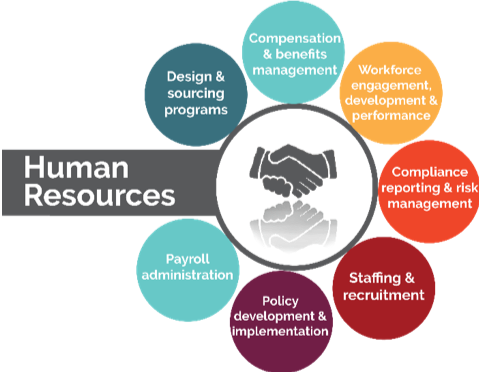
What is HR? What does HR mean? The acronym HR has endless possibilities. HR definitions can include Heart Rate, Human Respect, High Roller, House Rules and of course Human Resources. For Recruiters, HR represents the Human Resources of an organization. According to Wikipedia, the definition of Human Resources is: the people who make up the workforce of an organization, business sector, or economy. “Human capital” is sometimes used synonymously with “human resources”, although human capital typically refers to a narrower effect (i.e., the knowledge the individuals embody and economic growth). Likewise, other terms sometimes used include manpower, talent, labour, personnel, “associates” or simply people. A human resource person or a human-resources department (HR department) of an organization performs human resource management which includes overseeing various aspects of employment, such as compliance with labour law and employment standards, administration of employee benefits, organizing of employees files with the required documents for future reference as well as , some aspects of recruitment. The activities of the Human Resources team can be broken down into staffing, development, compensation, health and safety, and employee and labour relations. Some examples of this are: Determining the needs of staff and management Recruiting and training the best employees for an organization Hiring for permanent …