
Graduation

A Note to New Graduates

Natasha JeshaniNews

A lot of the work we do at Career Contacts is centered around supporting candidates in their job search.

One of the most challenging groups to find rewarding and meaningful work are new (high school and University) grads. As if landing that first job isn’t hard enough, they are now having to deal with less roles available, remote onboarding and limited excitement over building new relationships!

What we find is that the core challenges are:

  1. Being able to demonstrate skills and experience since this may be your first work opportunity
  2. Assumptions made about maturity, reliability, and responsibility that are often perpetuated in the workforce
  3. The lack of confidence in hiring managers to onboard remotely
PRO TIP: Our HR Consultants at Career Contacts are equipped to support hiring managers to feel confident onboarding, managing, rewarding, and providing feedback – all remotely!

For new grads specifically, when taking on your job search, here are a few things to remember:

  • Take the time to write a proper resume and cover letter

First impressions matter and this will be your first introduction to the place you’re hoping to work for, so you want to make yours count! Take note of any applicable skills that you have and classes that you’ve taken that relate to the position you’re applying to.

  • Create a LinkedIn profile

LinkedIn is a great resource for connecting with people in the workplace and for showcasing your best, most professional self.

  • Prepare for interviews and be on time

While interviews can be intimidating, especially if you’re new to them, being prepared and on time (even a bit early) can ease a lot of the anxiety you may be feeling and make you look great as a candidate. Make sure to do your research on the company you’re applying to and the job description they’ve posted so that you feel equipped for any questions they may ask, and then try rehearsing those questions with a friend.

  • Be confident in negotiating salaries

Confidence is one of the keys to success and although it can seem daunting to discuss salary, candidates who are self-assured in their abilities and what they can contribute to a workplace will make a good impression on a hiring manager or recruiter.

PRO TIP: Get an insider scoop about all of these points and much more in The HR Insider, how to land your dream job and keep it (buy now)

The bigger challenge is, even with all of the above, you still need to get in front of hiring managers and recruiters. Here are a few ways to do that:

  • Reach out to your network of family and friends and let them know you’re looking for work

Getting the word out about your search can increase your chances of finding roles to apply to, and personal referrals can go a long way in the job industry!

  • Keep an open mind

Your dream job may not look exactly the way you’re envisioning on paper. Keeping an open mind about the type of positions you’re looking for can open up a lot more doors that may end up being a great fit.

  • Apply, apply, apply!

Often times in a saturated job market, playing the numbers game is a good way to get yourself into that interview chair! The more you can put yourself out there, the more chances you have of landing an interview.

Entering the job space as a new grad can be overwhelming, but it’s also full of opportunity! Use these tips as a starting place to go into your search with confidence, and if you would like any support in your job hunt, Career Contacts is always ready to help!

Want to check out our current open roles? Head over to our job board!

admin ajax

Change Management

Natasha JeshaniExecutive Leadership, Human Resources Tips

This past year has been a year of change.

Many of our clients have transitioned into fully remote or hybrid roles, service offerings have changed, business plans have adjusted, budgets have been cut, and the list goes on.

Regardless of whether it is going to be perceived as positive or negative, change is challenging for most. Did you know there is actual science behind this?

The longer something is in effect, the better it is perceived as being. People are drawn to what is stable, reliable and “known”.

When we have a client that is experiencing change, we want to support them by ensuring that the change is effectively communicated and implemented with the support of the entire organization.

Today, we will walk you through a few areas that we think are critical to successful change management.

Step One – Communicate the Change

Ideally before the change takes place, you want to give your teams time to ask questions, engage in onboarding the new process and allow for them to have a chance to “buy-in”. If you can’t engage everyone before implementing a change, get them involved as early on in the process as possible.

blog 2
When communicating the change, you want to ensure you provide context around the “why”.

Here are a few things to keep in mind:

  • What prompted the need for the change?
  • How did you decide what solution to you were going to implement?
  • How will this impact the business and them specifically?
  • Provide timelines if the changes are permanent so there is a clear roadmap

Step Two – Transparency & Integrity

In order to alleviate the anxiety and fear that comes with change, the best thing employers and leaders can do is be transparent and provide a safe space for open dialogue.

Invite employees to be able to share any concerns or assumptions.

blog 3
Pro Tip: the quicker you are to talk to your employees, the easier it will be to avoid gossip and false facts

If your organization was hurt financially, you are not alone. By being vulnerable with your teams, you invite them to champion a rebuild and stay invested in the continued success of your team.

Step Three – WIIFM

You’ll see this piece of advice as a common theme in our blogs and over HR advice.

WIIFM: What’s In It For Me

Your teams will need to know how this impacts them, and company wide emails and speeches won’t cut it. Ensure you are providing your teams with honest and constant feedback around their own performance, to ensure that you are valuing their professional growth during moments of transition.

With our larger clients, contact 1:1s are not always feasible, even when involving management at all levels. If that is the case, we recommend providing your teams with a tool to submit their questions and concerns honestly and anonymously.

Organizations know that regardless of the reason change is the cornerstone of growth, and while it may be critical to your success so is the happiness of your employees.

Step  Four – Get Buy-in

blog 4

You already know that turnover costs organizations about ¾ of that employees’ salary. The buy in you get prior to, or early on in times of change will result in lower turnover – fact.

Easy ideas to generate buy in are:

  • Know what your employees love to do and connect the change to those pieces of their role
  • Have fun – no matter how difficult things are getting, you owe it to your teams to celebrate small wins, celebrate being a team and encourage one another to have fun at work
  • There is a difference between giving your employees tasks and responsibility; the later will yield much more buy-in
  • Growth within companies, especially small and medium sized organizations, does not have to be vertically; lateral growth can also be extremely rewarding
  • Remember that your employees are working for you and have lives outside of your company that need to be honored and respected
  • Do you provide “insider information” to your teams? You’d be surprised at how far trusting your teams can go

Overall, after a chaotic year, we found that the employees that genuinely care and become invested in the change within companies are the ones that are part of the process, not just a result of a decision.

For more support in how to lead your teams through challenging times, reach out to hr@careercontacts.ca – our HR Consulting division is experienced and ready to support you!

moeny talks blog

Dealing with Money: The Recruiter’s Guide to Talking about Money During your Job Search and Interviews

Natasha JeshaniJob Search

It’s the reason why we work, isn’t it?

Money is one of the most important drivers in our day-to-day life. This is why the conversation with your current or potential employer is so daunting. Everyone struggles with finding the sweet spot when it comes to money. An informed approach to ‘money talk’ is best because asking for too little, you are undervaluing yourself and asking for too much may be a real turn off.

What happens when you sell yourself short in a role you’re qualified for? You’ll likely resent the decision and be on the lookout for a new job in close to no time. On the contrary, if you ask for the moon right off the bat, you risk coming off as purely money-driven in a global HR climate where company values culture fit, professional growth, and intrinsic motivators.

So, should you avoid the topic altogether? Definitely not!   Let’s look at what Career Contacts President & CEO, Natasha Jeshani had to say back in 2018.

In her blog post, Natasha mentioned three key stages in which money comes up during a job search.

  • 1.     During the Initial Interview Stage
  • 2.     During the Offer Stage and;
  • 3.     At the end of the probationary period

I’ll expand on each of these a little further. By the end of this, it’s my hope that you, the reader, feels empowered to advocate for yourself in your own way.

During the interview stage

Money at the initial stage helps sets your target – the type of role you’re looking for, the industry, and maybe even the type of company. It also helps you set and work towards goals if you’re not quite where you want to be yet.

A good agency will be transparent about salaries and unless there is a really good reason not to, should always be posting the salary bands for each role to ensure there is pay equity.

Natasha Jeshani

During the Offer

Congratulations! Making it to the offer stage means you’ve made quite the impression with your prospective employer.

Pro tip: provide your expectations in the form of a range.

#yourcareercontact

There are numerous factors (i.e. benefits, flexible schedules, office perks) that can impact total compensation and ultimately, total consideration before you sign any offer. Also, take a look at salary guides and ask others in your network for their advice. Money talk is just that – a talk. Keeping the dialogue open will ensure you start your next job on the right foot.

Did you know that the most effective way to ensure pay equity within organizations is to create transparency and encourage dialogue? If you are an organization that is looking at ways to improve their compensation model, our HR Consulting division is equipped to support you with this!

HR@careercontacts.ca

The end of your probation

This brings us to the end of the probationary period. Although not as common, this might be a good time to leverage the past three to six months of work and effort you’ve put into this new role. A probationary period is a trial for company fit and to me, it is also a “prove it” time to showcase your value add.

I recommend to everyone that you keep an open line of communication with your employer. It can also be a creative process. For instance, you might be willing to start on the lower end of your range but with an increase after the probationary period if you perform well.

Don’t be discouraged if the conversation isn’t going the way you expected, instead, ask questions and seek out new skills to help you get to where you want to be.

Remember, a good employer will offer you fair compensation for work done but a great employer will work with you to reach your goals.

Thanks for tuning in!

Jeff So, HR Consultant

Tolu

Interview with Tolu Aladejebi – Black in Hospitality

Natasha JeshaniNews

When Tolu and Natasha first met, it was amazing how connected they both felt. It wasn’t an if, but a when in terms of finding ways of working together.

Almost immediately, they began to brainstorm and neither could have expected the types of opportunities that presented itself.

Being a Recruitment and HR firm, DEI has always been infused into the work we have done here at Career Contacts. When it came time to celebrate Black History Month, we wanted to ensure we were honouring it in a way that was authentic and lacked the performance we often see.

If we wanted to be true Ally’s we wanted to amplify the voices of black (women) and share their stories, their businesses, and their advocacy.

We decided that the idea of interviewing Tolu on her work (both with us and what is to come) aligned to our recruitment work, our DEI work and her ability to use her voice to share her (work) story!

We love learning about how candidates got to where they are today. Follow us as Tolu shares a bit about her path!

Tolu

Q: What was your first job coming out of school?

A: Wow! My first job after graduation was a night audit position at a resort in Banff. Coming from a city like Toronto and moving to Banff not knowing when I’d come back home was a bit surreal but I enjoyed my time there and I wouldn’t trade that experience for anything.

Q: What was your dream job when you were younger?

A: When I was younger, I wanted to be a pediatrician. I’m not sure if I ever said it out loud but I definitely thought about it and I sat with it for a bit. That all changed in high school when I took a hospitality class and fell in love.  It’s been hospitality ever since.

Q: What is your dream job now?

A: My dream job now is to get into HR, in a learning and development capacity within the hospitality and tourism industry.  I believe that this is the place that I can make the most impact in the industry and where I’d be able to implement anti-racism training and created more safe and equitable workspaces for BIPOC hospitality professionals.

PAUSE

We absolutely love this and if you don’t already, follow @blackinhospitality on Instagram to hear about Tolu’s experiences within tourism and how she is ready to see some change! We fully stand behind the work Tolu is doing and are proud supporters of @worthassociation who also is working hard to do some serious work within DEI.

Q: What do you for work now?

A: Currently, I run a business called Black in Hospitality which assists hospitality and tourism businesses create and maintain inclusive spaces for BIPOC hospitality professionals. Its really something that I am passionate about and I truly feel that there is shift that needs to happen within the hospitality and tourism industry.

CC: Tolu is also supporting one of our clients who works in the DEI space and we are so proud to work with both parties and to learn from the work they do. Representation in employees, clients and vendors all create space for learning and unlearning within the space of DEI.

Q: How did get to know / work with Career Contacts?

T: Who would’ve thought that the new way of networking would be through social media? This is how I heard about Career Contacts.  I would constantly see Career Contacts posting informative reels and truly cheerleading for other women, this was something that captivated and motivated me on a daily basis.  We slid into each other’s DMs and it’s been a wonderful connection ever since.

CC: We are so grateful that Tolu reached out and during our time of working together, we have had an opportunity to explore so many ways that we can support one another with the work we do, the communities we are building and voices we are amplifying!

Thank you Tolu to sharing a bit about your career journey – we can’t wait to see what is in store next!

Tolu can be found on Instagram @blackinhospitality or on her website at https://www.blackinhospitality.ca

Lamya blog pic

My Journey to Recruitment

Natasha JeshaniJob Search

The moment I landed at Career Contacts, I was excited that this was a place where I was free to share my story, my journey, and hopefully help others who are still searching for their “dream job’ or looking for their own career path.

Having studied Real Estate, I thought that I knew from a young age what direction I envisioned my career going in. I had worked for my mom’s real estate company since I was 16, and so I thought it seemed like a smart fit to follow the road she had gone down. I mean, it seemed like such a great idea – we both loved people, sales, marketing, and hard work. And I really liked being my mom’s administrative assistant. Many of the valuable work skills I have now were built on the solid training that she gave me. However, after finishing the course and working more closely in the Real Estate industry I realized that this was not going to be a long-term fit for me. Sure, I enjoyed meeting new people, hearing their stories, and wanting to help them in a monumental decision like buying their next home. However, there was less focus on getting to know them as a whole person and more reducing them to numbers, such as: their credit scores, down payments, and budgeting. I am happy that I took the course and pursued real estate, how can we know what we are built for if we do not know what we aren’t?

The lesson I learned: Hard work is important, but it can only get you so far if you aren’t really interested in what you are doing.

 While I was going to school, I stayed busy in the restaurant industry. I first started working when I was 16 in an Italian restaurant and I worked there until I was 20. I transferred to a different place at a High Tea restaurant and I worked there from when I was 20 until I was 23. I probably did every job that you can imagine in a restaurant. Barista, host, busser, waitress, dish washer, pizza maker, prep cook, and then manager/administrator. I never felt afraid to try my hands at these various roles and I am glad that I tried them. Did I enjoy each role equally? No, but I did learn to enjoy working and how to just ask if I felt like trying something new. This skill has served me well.

Tip: Ask your boss or manager when you have extra time if you can help in different areas in your workplace, you will see your role in the company differently and how you can make things more productive and efficient when you are seeing things through multiple points of view. 

I enjoyed the years that I worked there, it shaped the person I became by teaching me to wear many different hats at once which taught me how to multitask and stay calm under pressure. Mainly though, I loved the customers that I met, especially my regulars. I have kept in touch with many of them and they have become close friends. Each of them has taught me something new that is unique to their life experience and I would never have met them had I not worked at these restaurants.

The lesson I learned: You have very little to lose and everything to gain by putting yourself out there. Look at them as opportunities instead of obstacles. As possibilities instead of problems.

So how did I end up working as an administrator at an HR Consulting Firm? I honestly feel so blessed to have found this job and this company. I have always been interested in HR and have always sought-after jobs that have had some element of HR. So, you can imagine my delight when I found out that not only do I get to work with amazing people, always having something fun to do, but also that I would be working at an HR Firm where we specifically are trying to help people find employment. Truly making a difference in their life for the positive. The day just flies by and I feel excited to wake up in the morning and get to work and that is really saying something because I am not a morning person, but I feel motivated and happy to get up at 5am. It shows me that I am on the right path, exactly where I am supposed to be. I am where I belong now.

2020 threw us all many curveballs and it taught me that there are so many things that are out of my control, I can’t control a global pandemic. I can’t control when I see my family who lives on the other side of the world. And for a little while I felt that I couldn’t control where my next job would be. I learned that there will always be a long list of things that I cannot control, even without COVID, so I no longer gave that long list any energy. I decided to focus my attention on the things that I could control such as: courses and programs I could take that would be lucrative to the changing job market, reading books and watching videos to discover what I truly am interested in, and putting in the hours to perfect my resume and cover letter. And you can do these things too, and our HR Firm can make it easier for you. Make a good resume and send it to us. Make a list of things you cannot control and things you can control. Try to focus mainly on what you can control and if you are finding it difficult to let go of that long list, then set a goal that you will only worry about that list for 15 minutes every day and then promise yourself to move on after the allotted time. Many things seem impossible right now, but you finding your dream job doesn’t have to be one of them.

The lesson I learned: Sometimes if you want to achieve more, you have concern yourself with less.

 As our team grows, we look forward to them sharing their own journeys and stories.

At the end of the day, when we say we are people first, we start with our internal people – and we know they will carry that mission to every client and candidate they meet!

Career Contacts Human Resources Recruitment Agency British Columbia Vancouver Sea To Sky Blog thumbail 01 1

Mentorship during your job search

Natasha JeshaniJob Search

As someone that has been on the giving and receiving end of mentorship, I think that when done right, the results can be incredibly rewarding for both participants. If you are a job seeker that is looking to transition in your career, grow in your current role, or just unsure of what is next for you, mentorship is a great path to clarity.

Since every organization with a formal mentorship program operates in their own unique way, I think it is so important to really think about who you want as your mentor, what you want out of the experience and what level of support you really need.

In the last few years, I have supported and number of organizations including FEW, YWiB and most recently, have partnered with Locelle and Mentor Moments. Each of these organizations offer a different take on mentorship, so I encourage you to learn more about each if you are looking for a mentor (or to become one).

I believe strongly that a values driven process is paramount.

Today, I want to share with you 5 reasons why you should consider becoming a mentee:

1. Learn from the experiences of other

This is where you’ll get insight and exposure to new ideas and ways of thinking

2. Becoming more self-aware

Being self-aware is a process that takes time and should be continuous. It could be as simple as learning more about what you like, what you don’t like, identifying your strengths and weaknesses, what you are good at and what you need to improve on.

Learning your values and being able to identify them in career opportunities allows you to create a path to your true potential.

3. Job satisfaction

Reaching your goals makes you feel fulfilled and successful. You can’t reach a goal that has not been identified yet. With mentorship, as you determine goals, you can then create a process of how to achieve those goals.

Did you know that reaching goals will naturally increate job satisfaction. It will create more meaning and fulfillment (don’t just take our word for it, this is from Psych 101).

4. Expanding your network

The wider your circle, the more aware you are of what is going on in the world, outside of your bubble (and not just the COVID kind). Mentors automatically expand your professional network and can also impact your personal network as relationships grow. An introduction in a professional setting is one of the most valuable tools you can be handed!

Did you know that mentors are often the biggest champions of their mentees during a job search? Often acting as a reference, a guide, a sounding board and a confidant.

5. Increased diversity and improved corporate culture

If you are an organization that isn’t sold on supporting your employees with opportunities to access mentorship (inside and outside of the organization), this one is for you.

Representation matters.

If employees in your firm don’t have the representation, they need at the levels they aspire to reach, then it’s the organizations duty to support them in acquiring that representation elsewhere.

From a corporate culture standpoint, a mentored employee becomes an employee with increased confidence, a heightened sense of inclusion and belonging, and empowers their ability to knowledge share, engage and contribute positively to the organization.

Stay tuned for part 2 on 5 reasons you should consider becoming a mentor!

Career Contacts Human Resources Recruitment Agency British Columbia Vancouver Sea To Sky Blog thumbail 02 1

Tips on Staying Safe at Work – on a worksite

Natasha JeshaniNews

This week we want to discuss a few pro tips on how to remain safe on a worksite! A typical worksite already has so many existing safety precautions in place, but it is important to have a set list of COVID-19 safety protocols as well.

Although health and safety should always be at the forefront of everyone’s mind, it is especially important now with the increased risk in contracting an illness through interaction. Any labour position on an active site involves a lot of, well, labour!

By using your hands and collaborating with your team throughout the day, it is crucial you follow safety protocols and procedures to reduce the spread of COVID-19 and protect both yourself and your colleagues.

  1. Wear your mask

Plain and simple, make sure to bring your mask everywhere you go and wear it in all public environments (not just work). This will effectively limit the germs you spread, as well as protect yourself from others. Invest in one or two reusable masks that you are comfortable wearing for long durations and use them for work only. By doing so, you will be limiting work exposures to your home life, as well as remaining prepared for work and never without protection.

  1. Clean on-site practices

  • Wash your hands before entering work, throughout work, and before you leave
    • an extra precaution would be to carry a virus killing hand sanitizer to use as well
  • Avoid high touch areas such as door handles, shared tools, and kitchen equipment
    • now is a good time to splurge and invest in personal tools or reusable coffee mugs and lunch containers to avoid cross contamination
  • Do not touch your face, as the virus can be easily transmitted though your eyes, nose, and mouth
  • Do your research and determine how you can support a clean site
  1. Physical distancing

As outlined by health officials and vocalized frequently, physical distancing is one of the most effective ways to ensure your safety! Be sure to apply this to work practices when possible and wear your mask while doing so. To ensure physical distancing on site, you should:

  • Remain 6 metres away from others where possible
  • Avoid common areas such site offices, bathrooms, and smoking areas while others are using them
  • Avoid confined common areas such as elevators, stairways, and trailers while others are using them
  • Follow all signs and safety protocols in place to support your company in creating a safe environment
  1. Monitor and report all illnesses

COVID-19 portrays similar symptoms to our common flu. No matter how small your symptom, be kind to yourself and others and report it to your supervisors and follow medical instructions to self isolate and recover before re-entering your work environment. Symptoms can include (but are not limited to):

  • Fever
  • Dry cough
  • Sore throat
  • Headache
  • Chest pain/pressure
  • Shortness of breath and difficulty breathing
  1. Report all concerns to your employers

Whether you are feeling slightly under the weather, are concerned about site safety protocols, or uncomfortable with other individuals’ actions that may be contributing to unsafe work practices, we encourage you to inform your management team as soon as possible.

A few places to go are:
  • Site supervisors
  • The joint health and safety committee
  • The health and safety representative
  • The human resources department

As an employee you have the right to refuse unsafe work and should never engage in work duties you know are a danger to yourself as well as others around you. Please reference the link below if you would like to familiarize yourself with this code of conduct.

https://www.canada.ca/en/employment-social-development/services/health-safety/reports/right-refuse.html#h2.3

We also want to take this opportunity to thank all of our clients and employees who have not stopped since March and continue to go to work, keep both themselves and their colleagues safe, and are working hard (often as essential workers) through this pandemic.

We truly appreciate all the work that goes into showing up onsite on time, in good health and ready to take on the added safety measures in place.

The entire Career Contacts team appreciate each and every one of our clients and employees.

Career Contacts Human Resources Recruitment Agency British Columbia Vancouver Sea To Sky Blog sidebar 1

Top 5 Ways to Stay Safe at the Office

Natasha JeshaniNews

At Career Contacts, we often write blogs based on the conversations we are having with hiring managers and candidates.

Top of mind for candidates going back into the office lately is around how to ensure they are keeping safe (and leadership is looking to ensure they are doing their part too).

This week, we wanted to share our top 5 most rewarding ways to stay safe in your office environment during the pandemic. Although they may seem like easy things to do, they hold a much deeper value than people may assume.

  1. Remember to PLEASE stay home if you are experiencing any symptoms of COVID-19, no matter how small!

This is by far the most important step when practicing safe living during this time. This will effectively flatten the curve as well as not only protect you, your loved ones and your bubble, but it also protects all those you may encounter! Think of it as you actively protecting so many people by simply being cautious. No matter how small or insignificant your symptoms may be, it is safer for us all if you stay home. Be sure to express your concern to your employer and bubble, and proceed to dedicate a few days to your health! In BC, we are fortunate to have easy access to testing should your medical advisor suggest it, we recommend taking their recommendations seriously. Get your necessary essentials delivered or dropped off by a member of your bubble and take your few days of quarantine with a peace of mind. After the lockdown, most roles are finding ways to function from home. If this isn’t possible, this is what sick days are for.

  1. Splurge on a mask you  LOVE!

It’s true, masks really do prevent the spread of COVID-19! While masks may not have been a common essential in our past, they most certainly are now. They are now required in most, if not all stores and businesses, and without wearing one you are putting yourself and your bubble at risk of exposure. You are more likely to remember, use and enjoy your facemask if you dedicate 20 minutes to surfing the web to find a design, fabric, or function of mask that suits your personal needs. A handpicked mask is also a great opportunity to support brands you love and show a bit of personality in a way we haven’t utilized before. Kick the disposable masks to the curb and spend a little extra on one you are happy wearing regularly! Whether it be in the elevators, to the coffee shop, or even to a team meeting, be sure to bring your reusable mask to all personal and work efforts outside your home (this will also actively prevent more single use waste entering our oceans and landfills!).

PRO TIP: Don’t forget to handle your masks appropriately and wash them as needed.       

(spotted: A few of our HR Consultants, Pam and Reena, staying safe while on site)

  1. Remain tidy and distanced while in office

When entering your office environment, be sure to check for symptoms prior to arriving and don’t forget your mask! As COVID-19 protocols are in full swing, this is a time to develop new personal habits and reminders in efforts to reduce the spread. Once entering the office, you must remember to sanitize and be aware of your surroundings. For example, if a coworker is in the common spaces, you should not be. Be sure to communicate to your co-workers that the friendliest thing they can do when communicating with you is ensuring their distance and practicing safe living at (and outside of) work. When communicating, be sure to emphasize your gratitude and be kind – these are hard times for everyone. In regard to your workspace, have your belongings close to you and away from others to avoid cross contaminating as well as have disinfectant wipes available nearby for all your equipment and materials for end of day sanitization.

PRO TIP: Minimize the materials and things you have surrounding you is a great way to eliminate potential contamination; it can reduce clutter which fosters organization and ultimately leaves you with more space and less stress!
  1. Keep your bubble small and well connected

Your bubble; your people! These are your cheerleaders, loved ones and best friends. They are your chosen support system, and you are theirs. As this is an uncertain time for everyone in the world right now, it’s important that we each do our part to support one another the best way we can; through distancing. With fall, winter, and flu season in view, it is especially important to be practicing safe living. When organizing your bubble, it is important to remember that every individual, family, and household will be under different circumstances. For the people you live with such as immediate family, a partner or roommates, there is no need for any restrictions on physical contact.

When considering who you socialize with outside of your household, it is important to remember that the recommended size is six individuals per bubble. This is being called your “Safe Six” and means a group of six friends or extended family members that is consistently involved with one another. These individuals may breach the 2 meter physical distance however, no physical contact should be practiced to ensure safety to all parties. This is a great way to refocus on some people who hold a special place in your heart, or a guilt free excuse to minimize your surface level relationships and devote time to those you can count on for support throughout the pandemic.

  1. Monitor your mental health

Last but certainly not least, please do not forget to monitor your mental health and advocate for yourself. COVID-19 has had an incredible impact on people worldwide and it is important to know you are not alone and there is support available to you from both your peers and the government. Be sure to indulge in some self-care, physical activity or a virtual happy hour with friends to ensure you are heard and supported in whichever way you may need. A hot bath, long walk and phone calls with loved ones can work wonders on your mindset! When creating your bubble it’s important to compile those you feel comfortable confiding in, so you may support one another when need be. It is okay to feel overwhelmed or anxious by the uncertainty the COVID-19 outbreak has created. It’s important to remember that mental health is just as important as physical health, and to take measures to support mental well-being.

Here are some resources that can assist with maintaining mental health in the workplace during this time.

If you are an employer interested in learning more about how to ensure your office is a safe space for employees, please reach out to us at hiring@careercontacts.ca.

Career Contacts Human Resources Recruitment Agency British Columbia Vancouver Sea To Sky Blog thumbail 03 1

6 Tips to Make a Great First Impression at Work or In a Job Interview

Natasha JeshaniNews

Making a great first impression can be deal maker, or a deal breaker.

First impressions are made in the first 6 seconds that you meet someone.

We want you to make a meaningful impact when you are meeting someone for the first time, whether it is at a job interview, networking or at a social event.  Meeting people for the first time is easy for some people and hard for others.  This has less to do with the battle of introverts versus extroverts, and more to do with feeling equipped to know what to do and say when you walk into a room (or log into a screen).

When I am interviewing and recruiting, I try to put people at ease. At Career Contacts, our entire HR and Recruitment team is trained to focus on people first. This means that we walk into every interaction with a hope that we will get to know who you are, and what you are passionate about doing in your professional lives.  Here are a few tips to make a great first impression (and a bonus top on making a lasting impression):

  1. A bright smile and a friendly “hello” is what’s needed to immediately break the ice. We are talking to a lot of candidates who are nervous about being able to connect with their interviewers and hiring managers now that we are requiring them to wear masks.  Even if you are wearing a face mask, you can still see a smile in someone’s eyes.  At Career Contacts, we tested this theory during a team walk and were happy to see that not only were others able to receive our smiles, that we also felt the warmth and gratitude in return. This will put you at ease, as well as the person you are meeting.
REMINDER: Did you know that we often hear from hiring managers that they are also nervous about interviewing a candidate. Be mindful of this when you walk into a room, and do not expect that they will have all the answers (it will help you walk in with confidence too)
  1. A strong handshake. This used to be a key one for us as it was an easy way to demonstrate confidence in a first meeting. Now that you are not touching your interviewer, hiring manager, or others in a networking event, be prepared for how you want your greeting. Our team all have our own ways that we prefer to great others. Some prefer the elbow “bump”, others prefer a quick wave, while others still prefer to simply state “I would normally shake your hand, but it’s great to see/meet you”.
TIP: If you are ready for a new greeting, you’ll reduce any feelings of unease.
  1. Be positive, polite, and friendly. People enjoy spending time with people who behave in a way that demonstrates that they genuinely want to be there. A positive attitude shows confidence and leadership qualities.  It also shows the person you are meeting with that you value the time they are taking to meet with you. If you are requesting someone’s time or you’ve applied for a job and are being invited in, it’s important for you to thank the person for the time they are giving you (appreciation and gratitude always go a long way).
  1. Arrive on time. If you are running late please send a text, an email or call to let this person know so that they are prepared and not thinking the worst. Just like above, respecting someone’s time is critical. Even over Zoom, it’s important to log in a few minutes early and be patient with technology.In person, especially right now with added safety protocols in place, arrive early enough to ensure you have time to put on any PPE (personal protective equipment), answer any questionnaires and set yourself up from a safe distance to start your meeting.
  1. Use eye contact. Rather than looking down, looking away or not meeting a person’s gaze look them in the eye.  This will show them that you are interested, aware and paying attention. Not sure how to do that on an online call? Here is a hint: your eyes meet when you look into the camera, not when you look at their faces on your screen. Look into the camera to increase your ability to connect.
TIP: ensure you can see the face of the person you are meeting with. It ensures that you stay connected and not slowly move over to a social site or emails while the conversation is happening. It also allows you to mirror them and increase your connection.
  1. Practice a few filler questions to avoid awkward silence. Read more at The Muse for ideas, or check out these ideas of starting a conversation that will flow:
  • Tell me about yourself, what is your story?
  • Can you recommend a great lunch spot around here?
  • What is the most fun project you have worked on lately?
  • Have you been to any cool conferences or webinars lately?

Although in interviews a candidate often feels like they cannot be in the driver’s seat, most good recruiters and hiring managers know that they candidate should be speaking 80% of the time. That means that you have an opportunity to guide the conversation in directions that are most meaningful for you.

Making a great first impression is done quickly and does not take a lot of effort.  Give your attention to the person you are meeting.  Turn your phone off, give 100% of your focus and you will be a winner!

For more support during your job search, feel free to reach out to us – we are ready for your first impression!

Checking in with your teams; a message on mental health in the workplace

Natasha JeshaniNews

Checking in with your teams is really about starting from a place of authenticity, genuine care and compassion.

As many companies feel the uncertainty of the world and how their teams are doing, it is so important to take the time to check in with your teams to determine how they are coping, what they need, and how you can support. The worst thing we can do as leadership is to make assumption.

One employees' paradise is another employees' battleground.

After months of supporting our clients and teams both onsite and remotely, we worked together to come up with 5 tips on how to effectively check in with your teams:

1. Be proactive

When approaching your employees, the number one thing we would tell you, is that employees feel most supported when they don’t need the help, but know it’s available if and when they do.

This means that you don't wait for the forest to burn down, you reach out before the kindle even begins.

This holds true for everyone on the team; from your internal and external teams, remote and onsite, and the most junior employees right through to c-suite. This is the time to make everyone feel cared for and supported; contractors and employees alike.

The more you bring people together, the stronger your team will be.

2. Go beyond health & safety

With COVID creating a new reality, we are often focused on the health and safety of the teams. Career Contacts has been supporting a number of clients with ensuring that they are keeping their teams safe. Working with WorkSafeBC guidelines, we are supporting training, policies and practices, and constantly performing audits and encouraging dialogue. We are putting up signs, barriers, sanitizer and creating space for employees to feel safe while at work.

We value the health and safety of all employees but know that this goes far beyond COVID.

Through COVID, we have had discussions around:

  • Mental Health
  • Child and other dependent support
  • Ability and access to working from home
  • Burnout
  • Commute
  • Socialization
  • Building community
  • and on and on

For example, at the beginning of COVID, construction companies continued to do the work; learning as they went with the new COVID safety guidelines.

Career Contacts has had the opportunity of supporting in a number of ways to ensure that our temporary staff were feeling safe. At the beginning of each assignment, a member of our team would go onsite to check in and make sure the teams felt comfortable to raise any concerns. We also provided them with our personal numbers so they could text us throughout the day if they need to. What it felt like we were doing was ensuring social distancing, mask wearing and hand washing. What we were really doing was making ourselves available; valuing their needs over our time and providing them with assurances that we cared (because we genuinely did, and do).

3. Flexibility

Did you know that when discussing the benefits and perks of joining organizations, even above the ability to work from home, salary, benefits and vacation, is flexibility?

What does that me to us?

That people want to be treated with respect, and trust. They are adults, who have been given a list of roles and responsibilities, and want to be able to have some flexibility on how they execute against instructions.

It’s not just about the flexibility of working hours, but also in how they structure the day, how they manage their calendars, what technology they can add to create value, what process they use to reach their goals and targets etc.

4. Get out of the office/zoom

Moving employees away from their regular “office” environment, allows them to shift out of work mode, and know that the conversation is about them as people first, employees second.
We often encourage conversations that are lighter, that may even just be an opportunity to make genuine connections and build meaningful relationships that do not place all the value on what they do within the organization. If you have an office space that can be used, that’s a great way to connect physically. If not, meeting outside for a distanced walk, or even hoping on a different social platform so there is a different feel.

5. Be open yourself

As part of the leadership team, I am comfortable talking about my struggles, my insecurities, as much as I am talking about my goals and dreams. Not everything has to be about what isn’t working; sometimes it’s just about sharing where you want to see things moving, and ensuring that you are supporting that journey the best way you can.

We recently had a senior level executive assistant that was working with a client of ours for 20+ years who was facing a career dilemma. During COVID, she had a realization that she had been able to spend more time with her hobbies and creative outlets; one of which was writing.

After some discussion, we were able to approach the marketing department where she now works, and create a hybrid opportunity for her to create some news letter content that allowed her to flex her creative muscles, while still being able to continue to stay gainfully employed with her existing team.

The moral of this blog? Treat your people are whole people. Learn about what makes them happy at work, what they need to feel fulfilled, how they like to be appreciated, communicated with etc. Then, take the time to make a meaningful change in the way you work together!

Looking for some support in building out your communication and employee relations plans? Reach out to us at Career Contacts and one of our HR Consultants would be happy to provide you with an overall audit and ideation session.


Top 5 reasons to use an employment agency

Natasha JeshaniNews

At Career Contacts, it is so important to us that our teams believe in the work we do, and how we do it. The best way to represent any brand is to truly believe you align with it, that you are doing meaningful work, and making a real difference!

We invited about newest (and most junior) recruiter to write about her thoughts on how we work here at Career Contacts and are excited to share her thoughts with you on the blog today!

Based on her research on what we do, and our industry as a whole, here are Rheannon’s top 5 reasons to use an employment agency:

  1. There is no charge to you as a candidate!

Many are misinformed when it comes to how we assist candidates find work in their ideal fields. We are working on behalf of our clients to find them the most qualified applicants, and all costs are the responsibility of that organization. As a candidate, our services to you are of no charge and you will not pay any fees at any time. Whether you have been successfully considered for a position, are new to our agency, or a returning candidate, we will be your free job search resource!

  1. Be the first to know!

Employment agencies have been fostering successful relationships with their clients since day one. In the case of Career Contacts, that is over 25 years! This not only means we are familiar with our clients company culture and what they are looking for, but we also get the exclusive opportunity to recruit for upcoming positions that they have no yet advertised. Those actively in our database will be those we contact as soon as possible in hopes of matching them with their ideal role.

  1. We do the work to save you time!

Many candidates are looking to make a change in their employment field, but rarely have the time to dedicate to successfully job hunt. As an employment agency, we save you the immense amount of time customizing your application and cover letter to suit one role after another, and let you focus on your more immediate responsibilities in life. Whatever you may be looking for, it’s our goal to get you there as soon as possible.


  1. As recruiters, we have a passion for placement!

As recruiters, we know that every individual is capable of doing great work and is deserving of a great workplace; nothing makes us happier than being able to assist in that process for not just one side of the equation, but both! When organizing a recruitment process, we dedicate ourselves to understanding the needs of both our clients and candidates to ensure that we best match those capable of forming a successful long-term relationship. It’s important to us to get to know each candidate in as much depth as possible so that the so we can promote not just your CV, but what makes you the unique individual that you are.

  1. We have industry expertise!

By using our services, you are putting yourself into a much larger network with various opportunities within several different roles! Career Contacts specifically is a generalist firm, so we work with many positions within many industries, which provides us with added reach, and you with added resources.

Did you know that if you combine all our HR Consultants and Recruiters, you’d hit over 100 years of recruitment and HR experience? 

You’re not being considered for just one position; you will be consulted on all positions matching your interests and qualifications that we have available (or know are becoming available). That being said, an employment opportunity is just the first step.

BONUS REASON

As your job search resource, the services we offer can include but are not limited to are:

  • Remaining updated and informed on the current job market

We will help you navigate the industry you are interested in and assist you in pursuing a career path that matches all your preferences and requirements. We are constantly updating our files, compiling information and working to find quality employment opportunities. Whatever questions you may have, we will find the answer for you.

  • Interview organization and preparation

We will organize the interview process and forward you all the details that you need to know about the interview including the job description, company background, dress code, contact name etc. First interviews are stressful, but we can alleviate most of that by fully preparing you!

  • Contract/salary negotiation

As your resource, we will hear your requests and negotiate on neutral terms with a potential employer when necessary. We understand each individual has specific requirements that make a big difference, and we want to advocate for our candidates as well as find a solution that is possible and within budget for our client.

Did you know one of our owners (Natasha) literally wrote the book on this? Check out The HR Insider, how to land your dream job and keep it (which hit #1 on Amazon a few years ago!). 

Here at Career Contacts we believe in open, honest and continuous communication. Should you have any questions, please don’t hesitate to reach out to us.

Anywhere in BC at 604-606-1831, In Squamish 604-898-8236 or Whistler 604-905-7696. We would love to get to know you and assist you in any of your career needs.

You may also find all of our open positions we are currently recruiting for on our website posted to our job board, take a peek!

How to Transition to a New Role without Burning Bridges

Natasha JeshaniNews

At Career Contacts, we are constantly supporting candidates as they transition from one company to the next. It is so important to support them in landing their dream jobs, without leaving a storm behind. 

We believe strongly in the power of relationships and today, our newest team member, Reena, is going to share her experience transitioning from her previous company. 

I have been humbled by my transition into a new role, as it has been done by creating meaningful connections rather than burning bridges.  As I leave for a new role, my outgoing employer is happy for me and has also encouraged me to visit and stay in touch.

My last day was very bittersweet, as I had a lot of conversations with those who I brought onto the team thanking me for giving them a chance to join the team.  I took chances on people and looked for a true fit on both ends and sometimes that meant taking a chance on those who did not have as much experience as we were looking for.

This whole process has reminded me why I love doing what I do and has me excited for the next chapter.  When you are truly passionate about what you do and treat the place you work as your own, moving to a new role without burning bridges is very seamless.

Here are some tips on how to make that possible:

  • Before anything be positive and remember why you started with the company and reflect on your contributions and the support you have received
  • Once an offer for a new role becomes official, communicate with your manager or whomever is your direct report-to via email and set up a time to discuss the departure
  • Be honest to your manager, or whomever your direct report-to is on why you are leaving and be appreciative of the opportunity to have worked alongside them
  • Ensure you give 2 weeks’ notice, so you can effectively offboard your role and tie up any loose ends
  • Create a Functions document for your role with bullet points and links to any resources that will be helpful
  • Communicate personally with your team and those you work with directly, either in 
    person or through chat about your departure and encourage them to stay in touch by offering your contact information.
  • Be professional through your last day as you are still an ambassador of the company and its values


When you are transitioning to a new role, it is important to be positive about your outgoing employer as you transition out of your role.  If you do have any frustrations, try to communicate those to your manager or whomever is your direct report-to.  Discussing how much you enjoyed working there and some fond memories is a great way to ease any tensions of your departure.  Transitioning to a new role can be done with a positive attitude and will result in having stronger connections with those you worked with rather than burning bridges.


Looking for more support as you give your notice, negotiate that new offer, or start your new position? Pick up a copy of The HR Insider; how to land your dream job and keep it! Written by our Vice President, Natasha Jeshani. 

Five Tips to Ace Your First Virtual or Zoom Interview

Natasha JeshaniNews


As we are all practicing social distancing due to COVID-19, job interviews and our point of contact with one another has changed; it’s a new and changing world out there!



Recruiters, interviewers and hiring managers are now using online platforms to connect with people they are meeting with for the first time.  First interviews or virtual interviews are often online with platforms such as on Zoom, Facetime, Microsoft Teams as well and other virtual sites.


Here are a few tips to be successful in your next remote interview:

  1. Dress professionally. Although you are at home dress as you would for an interview.  Dress from the shoes up – be prepared to close a door, window or get up from your desk.   Make sure the area you are sitting in is neat and tidy.  If the camera drops or you have to get up form your desk you want to be fully dressed and prepared.
  2. Have eye contact with the camera. Be eye level with the camera so that the person you are talking with is not looking up or down at you.
  3. Situate yourself at a desk or table without interruptions. A loud TV, barking dog or person talking in the back  ground is a distraction and will set off the interviewer.  A bright room with lighting and a neutral background is great.  Turn off your phone and email so that you are not distracted during this meeting.
  4. Be Prepared. Do your research on the company, review the website, review the job description as well as have a copy of your resume printed to refer to.  Don’t forget to have your laptop charged or plugged in.  Have a cheat sheet prepared with your strengths, weaknesses, and questions for your interviewer.
  5. Practice with a mock virtual interview. Job interviews are nerve racking so familiarize yourself with zoom or the platform you will be using.  Become an expert.  Contact a friend over family member using the method so that you know how to turn your mike on, adjust volume or lighting to see your interviewer.  Be aware of the text chat, video recording, muting if a n emergency arises as well as screen sharing.

Most important to do list item in our opinion? Smile and have fun.  You’ve got this!


If you have any questions, please feel free to email our team for advice or suggestions.

Looking for a Job after Graduation – a few ideas to get started

Natasha JeshaniNews

Starting a job search after graduation, especially during COVID is new for all of us.   Breaking into your new profession or finding that dream job takes patience and determination.  Here are a few ideas to get started:

Identify Your Strengths & Highlight

It is important that you quantify or highlight achievements on your resume as you start to apply for jobs. When starting a new career, you might have limited or no experience, that is ok and should be expected from hiring mangers.

In this case, identify your transferable skills such as customer service, attention to detail, accuracy, relationship building, follow up, sales etc.  These are “soft skills” but hold a lot of value for a lot of different types of positions and industries.

Other items to highlight are volunteer work, school or sport leadership roles, research or internships.

Update Your LinkedIn Profile

Update your resume on LinkedIn, make sure it’s up to date, and let your network know that you are “seeking opportunities”. You may have a contact refer a new job opportunity to you, that you that you would not have otherwise been aware of.

Also, did you know recruiters and hiring managers can see your profile and that you are listed as looking for work? This will give them added incentive to contact you.

Create a list of companies you would like to work for

A lot of jobs are found through referrals or networking. Don’t be shy to tell friends or colleagues that you are seeking a career opportunity. Visit job boards, websites and industry associations.  Dig deep into industries that you are interested in working in, and call companies to set up information meetings to learn about jobs. The more proactive you are, the more seen you become. It is much easier to think of you for a job opportunity if they have your information on file already. Even easier if you’ve already met!

Stay Focused

Start well before graduation when thinking about jobs, but don’t get discouraged if you missed certain events or opportunities. Keep yourself motivated, on track and focused while being patient and open-minded. This might mean that you try to schedule a meet and great on your own instead of having attended a job fair. Maybe this means you call and hiring manager to simply introduce yourself and learn about what they might be looking for in the future. The goal is to stay top of mind for companies, because they could have a need at any moment.

Stay Positive

Keep a positive mindset through the job search and interview process, and do your best to no become discouraged. Stay positive during this time and take care of your mental, emotional and physical health. These all count towards the confidence you will exude during the hiring process. We know, as recruiters, that it can be daunting to go through the different parts of the process, so know that you are not alone.

Please feel free to contact us with any questions or for assistance hiring@careercontacts.ca

The HR Insider, how to land your dream job, and keep it is also a great resources for all stages of the job search process!

We wish you so much success!

5 Industries That Are Still Hiring

Natasha JeshaniNews

We know the job market has taken a steep dive in the last few months.
In BC, according to our PM, Justin Trudeau, they “received over 500,000 applications compared to just under 27,000 applications for the same week last year,”  in reference to employment insurance.

Instead of focusing on the downward job market, we wanted to take a moment to highlight a few industries that we are currently working within that are still hiring. Everyone knows that tech companies (for the most part) have adapted well, or did not need to adapt much at all. Many still continue to be hiring. While we are working with many tech firms, here are some industries that you may not have considered, that are doing some really meaningful work!

If you are looking for work, don’t hesitate to reach out to us at Career Contacts for more information.

Read More

What to wear to a remote job interview

Natasha JeshaniNews

When going to a job interview, first impressions really count.  Now that a lot of interviews are going remote, many are forgetting that you are still about to make a first impression, and your appearance counts.

Dress with confidence and style; be polished and professional.

Here are some tips for you:

Find out what the dress code is

Ask what the dress code is when setting up the job interview.  This will give you a hint on what they are expecting, and also give you a glimpse of their culture too!

Be conservative with what you choose

If the job interview is at a formal office, dress the way you would on your first day, unless told otherwise. If it is a casual office, and jeans and t-shirts are worn, you should still do a more business variation of this to look put together and like you put in effort for the interview.

Wear clothes that fit

Don’t wear clothes that are too tight or too loose to the job interview. Both are inappropriate and will make you look less put together.

Wear clean clothes

Even over zoom, we can tell when your clothes are dirty, and it gives off the wrong first impression.

Be well groomed

The COVID restrictions have made it challenging for everyone to feel comfortable getting hair cuts, and heading to salons for regular appointments. This is not an excuse to show up to interviews a mess. Simply putting some effort into keeping your hair out of our face, and clean, will go a long way. Remember that your hands are often seen in the camera, so while you may not be getting your nails done, they could still be clean.

Dress for the job you want, not the job you have

You’ve likely heard this saying before. It’s important that you let go of your preconceived notions of the work that you are doing now, and focus on where you are looking to be in the future. Dress for the job you are applying for.

Feel comfortable adding your own personal style

Add a splash of colour or personality like a tie, scarf, or piece of jewelry. It’s OK to have personality. You want to be memorable and stand out from the other candidates and adding a little statement can help with that.  At the end of the day, you want them to hire you; the real you. So feel comfortable sharing a bit about who you are; we just recommend you don’t go overboard.


At the end of the day, remote interviews feel very similar to in person interviews, when you get going. The main thing is to feel confident, prepared and ready to what them with how well you align with the position they are hiring for.

Want to know more about about how to succeed in job interviews, check out these additional tips.

Good luck at your job interview!

Guest Blog: The New Customer Relationship

Natasha JeshaniNews

At Career Contacts, we are firm believers in #collaborationovercompetition and we have built our company on that premise. 

We are excited to feature Azzra Bardai, a customer success expert, who can provide some insight and tips for our growing list of clients on how to adapt and form the new customer relationship!

The current global health and economic pandemic has forced us to transform in a very short period of time. Conversations are shifting  to developing a return to work strategy focused on the path to recovery, but we must also continue to focus on our customer relationships. The shifts in social and business behaviours will impact all of us and the importance of building relationships with our customers is top priority. 

Customers are at the forefront of what we do, customers expectations were already on the rise pre-COVID and will continue to shift. Corporate social responsibility is driving a new standard for how we work with our customers and the value we deliver to our customers will need to be maximized.

Deepen your existing customer relationships and foster new ones

Now is the time to move away from the standard customer relationship and create a new standard. The new standard are relationships that span outside of business, where there is a true sense of authenticity, empathy and understanding of customers. The ultimate result, customers that give you reviews and referrals without you asking. 

Check in

Pick up the phone, send a text message or connect via social media (do you know what works best for your customers?), not just when you have an ask. Reach out with no business agenda but instead just to check in. Create the opportunity to gain an understanding as to how your customers have been affected by the pandemic in life and business. 

Think about the long term future 

The past few months have forced us to think about the short term future. How do we help our customers now but as we begin to shift back to think about their long term future, what have you considered for your customers? The continuation of postponing monthly recurring payments will still be in play. Be ahead of the curve and work with your finance department to determine what you can offer. 

Author: Azzra Bardai, Customer Success Expert

Experienced and results driven, Azzra acts as an advisor to customers throughout the onboarding cycle, driving value through effective engagement of platforms, and managing resolution of any technical issues. She prides herself on developing relationships with customers, keeping the best interests of stakeholders in mind, and acting as an internal advocate.


How are you creating value for your customers? You may have already implemented one or all of these best practices, but if you haven’t now more than ever is the time to be thinking about how to structure your organization to be customer-centric.

Want to get some more information on how to ensure customer success in your organization?
Feel free to reach out to us and we are happy to make some connections!

hiring@careercontacts.ca | 604-606-1831

10 Ways to Organize and Optimize for the Future of Work

Natasha JeshaniNews

As we entered a new year and a new decade, we as a global society were thrown into unprecedented times with the outbreak of the COVID-19 virus. Employers are still reeling from adjusting to a work-from-home structure, an uncertain future and for some, complete shutdown and the letting go of valuable employees.

Coming out of all the turbulence, are countless new opportunities for organizations to uncover a new way of work.

One such opportunity is using this interim period to review and take inventory of processes, templates and other supporting and supplementary documents that are currently in place.

At Career Contacts, we continue to grow our team slowly, and strategically. Most recently, adding a Director of Partnerships, to support our clients in their need to create a new way of work – one that is organized, and optimized, for the future of work.

These reviews will allow organizations to identify the current state of affairs, and determine what gaps there are.

The next stage would be to implement the required changes and begin to create new tools as needed.

You know, all the things that we say we will do when we have time, when things slow down, when the high priority stuff clears? All that work that sat on the side of our desks? Here is the chance to get organized, optimized, and ready to gear up while we, as a collective, establish a new normal.

While we cannot deny the sheer upheaval that this pandemic has caused for us, we can take this slow down as a means of improving and bolstering our operations and the tools that support us day to day.

Here are ten steps that can get you and your team started today:


ONE – Take a second to reflect

Run through your day – what roadblocks do you come across, what stalls you, what issues do you face?

TW0 – Take stock

What processes, documents, templates do you have currently? As you take this inventory, it is amazing to see how many duplications, contradictions and cross functionality can be revealed.

THREE – Whiteboarding/brainstorming session

Virtually of course, gather key team members and stakeholders to discuss their experiences, what they feel is working and what is required to promote efficiency, supports positive workflow and any other innovations they have in mind. The people who are engaged with these artifacts daily are your greatest data points and will provide you with the most candid and valuable information.

FOUR – Planning and strategy session

Once you have determined what you need and what needs to be done, gather the troops to figure out timelines, approach, inter-dependencies, and assign specific tasks.

FIVE – Get to work

Have fun with this as you collectively develop, revise, rework and establish these processes and tools. It is your time to make things really work for you so throw yourself into it and see the evolution of the elements that make up your day to day.

SIX – Check-in

Research and experience shows that initiatives such as this can fall flat if the teams are not discussing the current state, any blockages, questions, issues, risks, inconsistencies that have arisen during this key revision and development time. Have the team collate once a week, preferably at the start, to outline the current state of their task, what is outstanding, and any other specifics. Not only will this drive progress but allow people the space and opportunity to collaborate and overcome any roadblocks that they have encountered.

SEVEN – Presentation for feedback

Once the specific process, template, tool etc., is complete, have the responsible team members present it to the larger group/managers/executives, depending on your organizational structure. This presentation should include some background, whether this was developed completely new or based on previous components, development methodology, its purpose and how to use. The second part of this is to allow for others to provide inputs and edits and ask clarification questions for refinement and moving towards finalization.

EIGHT – Editing and finalization

Post-presentation, the development team or resource will take the feedback and revisions provided by the team and implement the changes and complete a final read through and review to finalize.

NINE – Approval

Once the process/template/document/tool is complete, submit to the correct team member or department for final review and approval. Once approval is granted, place the completed piece in the correct folder, file, upload to SharePoint or wherever the appropriate knowledge management space is for your company.

TEN – Training

Depending on your organization’s structure or department hierarchy, to ensure that all team members are apprised of your new tool, it would be advantageous to host a virtual training session. Not only is it a chance for team members to connect, it ensures that everyone understands its purpose, usage and allows for a question and answer period.

This list is not meant to be exhaustive, but a starting point depending on how your teams and companies are structured. By equipping our HR Consulting division with a Director of Partnerships, we have added the ability to not only be a human resources business partner, but an overall addition to your senior management and leadership teams.

Needing some support in getting started?
Our team can assist in providing reviews, field any questions, have strategy calls or provide any clarification or advice as required.
Please feel free to reach out and we at Career Contacts would be happy to help.


Effectively Onboarding your Remote Teams

Natasha JeshaniNews

Our favorite part of onboarding is the feeling of knowing that you are welcoming someone new into your fold. Onboarding is going to look different as we begin to transition teams back into the workforce.


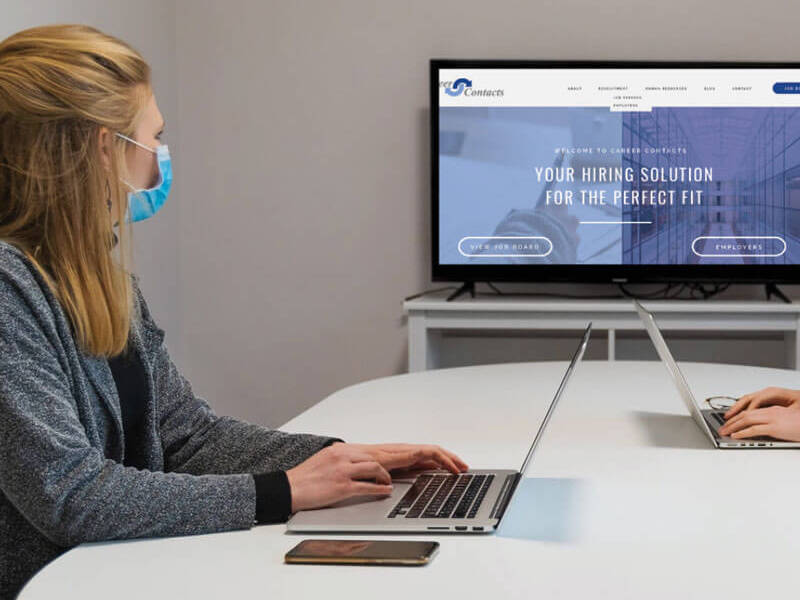
This transition will likely be slow, and many will begin with a remote onbaording process to reduce physical contact where possible.

Doing so remotely will never feel exactly the same, and we don’t believe that its necessary to pretend otherwise. We value our current onboarding programs that are onsite, but also know it’s important for companies to be given options as they pivot their businesses.

Instead, at Career Contacts we are inviting our clients to take on a new way of onboarding that reflects the new normal. We encourage you to look at incorporating some of these new ideas and as always, we are available to support with a more customized plan for your specific team!

  1. Be mindful of who is home

In this climate, we know that not only are your employees being forced to work from home right now, but their families are likely at home with them. Be mindful that your onboarding process respects their individual work environments at home.

Our team at Career Contacts is diverse. We recognize that everyone has a unique dynamic at home and want to be sure that they do not feel at a disadvantage for anything they can’t control.

  1. Don’t cram everything into the first few days

The easiest way to for someone to absorb a new environment is to do so slowly. Provide your new team members with small, easily digestible onboarding pieces. This will allow them to try out each piece slowly, provide any feedback and get support right away.

  1. Be available

The worst feeling is to feel like you’ve been thrown into the deep end and being unable to swim. Stay connected and available for your teams while they onboard. Ideally, you want to introduce them to 1-2 people a day, to allow them to have a few people to reach out to for support.

Introducing them to their co-workers early on will also allow them to feel like part of the team quickly.

At Career Contacts, we have several platforms that we use to stay connected. We ensure that our employees not only have access to the tools, but training on how to use the tools effectively.

  1. Vary the mediums

Get creative with how you disseminate all the new information to your new employees. Documentation is just one way. Try incorporating video calls, conference calls, pre-recorded videos, etc. This will also help break up the day and allow your teams to stay interested in the material they are being sent.

  1. Give them the tools to succeed

Every new employee should have access to what they need before they begin. This means that they feel completely supported and able to do their jobs. It is much better to start them a few days later with access to drives, technology, CRMs etc. than to give it out slowly and make people feel disconnected.

  1. Swag doesn’t have to be fancy

We know that larger organizations have the capacity to provide new employees with over the top welcome packages. While this is always a great feeling, smaller companies can’t always do this.

At Career Contacts, we have personalized cups and sweatshirts with our logo on it. It’s a small way for the team to feel connected. Get creative with how you give your teams swag; its more about feeling a sense of connection, than about the items themselves.


Wanting some support with your onboarding process? Our HR team is ready to support you!

Contact us today at hiring@careercontacts.ca or 604-606-1831


Effective Strategies to Offboarding Teams

Natasha JeshaniNews


Employee exit management (often referred to as offboarding), is an intentional process of separating an employee from their employer.

There are many ways to provide a proactive solution for temporary and permanent layoffs. Being proactive ensures that you have action items in place well before the employee is told they are no longer going to a part of your team.

Below are our top 5 things to consider when offboarding proactively:

  1. Be empathetic from start to finish

    1. You will see this threaded through all that we do. We believe whole heartedly that people will always give what they get. The better you treat them, at every stage of their career, the better they will leave your organization.
    2. A layoff is likely not expected or desired and therefore, can take some time to process. Be prepared to give them the time they need to be “ok” with your decision.

Ensuring your teams experience a graceful offboarding process will be paramount to the relationship you keep with your remaining employees and will be the basis on which your employee brand and culture stand on.

  1. Get constructive feedback

    1. Ensure that you give the employee the ability to share their thoughts on what worked, and what didn’t, during their time with you. It is often easier for this to be outsourced to ensure that you are getting honest feedback. A layoff can be a sensitive time for people, so ensure that you are giving them an opportunity to process, grieve the loss and manage their needs before asking for anything in return
  2. Ensure an effective hand-off

    1. Communication is your number one responsibility. Speak with the employee, speak with their supervisor and their teams, and be open and available to an ongoing conversation.
    2. If you are only eliminating part of the team, someone else will be picking up the pieces that are being left. Support your existing team by ensuring the laid off employee is properly and effectively handing off their work.
    3. Be mindful that this is a difficult time for them and let them determine the best way to do this.

Some ideas of ways to effectively facilitate a hand-off are:

  • An email with a list of outstanding tasks
  • A 1 on 1 meeting
  • A call setup between the employee and the team member
    1. If there is not the ability to effectively handoff, ensure that you have their contact information updated, should you need to reach them
  1. Celebrate your outgoing employees

    1. The Coronavirus has hit companies in unprecedented ways. Many of the layoffs taking place right now are not due to a company’s desire, but out of necessity. The teams that you are letting go are likely winners, and people that you hope will return to your business when the time comes.

Some great ways to show your appreciation and admiration for your outgoing teams are:

  • Thank you cards
  • A going away lunch
  • A break in the last day to hold a standup and personally thank them for their time and support
  • Provide them with a reference letter if they did a great job working for you
  1. Have a plan

    1. If you know that this is a temporary layoff, make sure to communicate that clearly
    2. If you know that there is likely no opportunity of them getting rehired, let them know
    3. Be honest, be transparent, be kind


The piece that we see forgotten the most is that while you are looking after the employees that are being laid off, it is easy to forget about the employees that remain.

There is no doubt that they are wondering if “they are next” so take the time to communicate with the remaining team let them know what you are planning.

Reaffirming your commitment to your existing teams will ensure you do not have to deal with additional, and unplanned attrition.

Allow for the remaining team to come forward with their concerns, their ideas, and their hopes.

Bring them in to the plan for the future so that they have a say in the future of their company.

Lastly, in order to ensure that you have completed all the necessary steps during the offboarding process, Career Contacts has created a robust offboarding checklist.

Interested in getting a copy of our offboarding Checklist? Email us at hiring@careercontacts.ca and we will send one over to you, at no cost!


The entire HR team at Career Contacts is dedicated to supporting our clients and our communities with FREE COVID related HR support. One of the most demanding requests we have received is for offboarding support.


Please feel free to reach out to our teams to see how we can support you today!


How to feel “unstuck” while feeling “stuck” at home

Natasha JeshaniNews

Most of us are currently following the stay at home orders that have been instituted all over the world. I have been hearing a lot of people saying things like “I just feel stuck” or “I feel like this is wasted time”.

The fact is, most of the world is in the same situation, so feeling like you are getting left behind as the world is moving forward simply isn’t the case, we are all in the same boat. Mindset is key in this situation. It’s important that you are choosing to see the silver lining of this extra time as the chance to use it however you feel works best for you. For some, that will mean some much needed down time, for others, it might be getting in that quality time with the kids that you have been missing. For others, it can be a time to grow your skills and knowledge to set you apart when the world returns to normal.

Here are some ideas of great ways to keep that stagnant feeling at bay!

Take an online class

Utilize some of the wonderful online learning platforms to deepen your software skills, learn about how other people in your field approach their tasks, or even to pick up a new hobby. If you don’t know where to start here are a few suggestions:

  • MasterClass is a great site where famous experts in their field share their knowledge. Here you can learn to cook like Gordon Ramsey or critically think like Neil deGrasse Tyson. It is a bit pricier, but they are running a buy one, get one deal that you could split with a friend or colleague.
  • Udemy is similar in concept to MasterClass with a wide range of subjects and price points. They also run great sales every few weeks with up to 90% off some courses.
  • SkillShare is more targeted to the arts but features great content if you are looking to pick up a new hobby or are interested in an arts career, and they are running a free two-month trial.

Read a book

Normally our schedules are so packed with work, social events, and errands that we don’t have time to sit down and read a book. Check out the great selection of physical books available for delivery online or download an eBook from a respected person in your field, a great life coach, or a how-to book for a skill or hobby you are interested in.

Did you know we have a career coaching book available? Check out the HR Insider; how to land your dream job and keep it – available online at Chapters and Amazon!

Update your LinkedIn / Resume

If you are facing a career change or looking to grow your network, take some time to review your LinkedIn page and resume to ensure that it is up to date and the best reflection of you professionally so that recruiters or potential connections are more interested. Make sure to include keywords in your profile, so when recruiters are searching for candidates, your profile will have a higher change of popping up on their radar.

Practice your skills

Take this time to revisit the skills on your resume that you may have not used in a while. For example, if you have Excel as a top skill on your resume but haven’t been using it in your current role take some time to play around and assess where your skills are now and take steps to improve them.

Set goals

Things like legitimate goal setting can get bumped off the to-do list easily. Take this time to sit down and map out some SMART goals for yourself for the short term and long term. If you set a 3-month goal, add a calendar alert to remind you to check in on your progress six weeks from now, and again at the goal date.

Practice interviewing

If you are looking toward applying for positions soon, ask a friend (or us!) to stage a practice interview with you. The earlier you do this practice interview the earlier you can identify gaps in your skillset that could help guide you to the best online courses to be taking now.

Shop around

Turn your designated Amazon scrolling time into time where you “shop” for dream companies. This form of shopping will not cost you anything and may help you discover a new goal.

Reach out

If you have (or discover) a company that you would love to work for, reach out on LinkedIn to see if you can arrange for an informational interview using Zoom or FaceTime. Although the recruiter at your dream company might not be immediately available to interview or meet with you, it’s still a great idea to throw your name out there and express your interest in case a suitable role opens up later down the road.

Develop your brand

Who do you want to be perceived as professionally? Do your LinkedIn, socials, and resume all reflect the same brand identity? If not, take some time and analyze what you should adjust to best represent yourself. If branding is not your strong suit that may be a great online class to take!


If there are any great things you have found to continue your professional development during this time we would love to hear about it!


5 ways to show your remote teams you care

Natasha JeshaniNews

Now that we are working as a 100% remote team, being away from each other daily has been the hardest adjustment for us.

As Leadership at Career Contacts, Andrea and I love planning impromptu ways to ensure the teams know we care. Under normal circumstances, that might mean team lunches or afternoon bubble tea runs (we clearly show our love through our stomachs).

Now that we can’t do these things, we’ve come up with new ways to show our team some love. We also took inspiration from what other organizations are doing and are offering and wanted to share!

Before we begin, we must recognize and acknowledge that this is a really hard time for companies financially so big expensive gestures are not ideal.

Here are some modest ways to show appreciation, while still maintaining a sense of fiscal responsibility.

1.   Don’t stop celebrating birthdays

Let your remote teams know you’ve remembered by planning a surprise virtual birthday party. Everyone can show up whatever video platform you’re using with a sign telling them why they are appreciated.

The cost is low, the time to plan is light and most importantly, the impact is high.

2.   Remind them that you care

Once a week, I try to make sure that I text my external remote team that I don’t see everyday with a message reminding them that I am thinking of them, missing them, and appreciating them.

It’s a small gesture to let them know that while I know things are hard, they are our number one priority within the Career Contacts family.

3.   Put a twist on old ways of showing appreciation

For those with a little bit of a budget constraint, we have planned a team lunch. Each member will order their favorite lunch and Andrea and I will have it delivered to their homes (no contact, social distancing protocols intact). This way, we can all have lunch together as a team and bring back the “pre-COVID” feeling.

NO BUDGET? NO PROBLEM!

To modify this idea, simply ask your remote teams to grab their own lunches from home and join you for lunch together online. Spend the time asking everyone how they are doing, chat about new shows and podcasts; anything but work!

4.   Have fun

We know there are a lot of end of week happy hours and so many creative ways to bond. One thing we love doing is hopping onto video chatting apps (like Houseparty) and having some fun. It’s a really fun app that allows you to play games, and get creative with how you connect. Everyone brings their favorite 5pm drink, and it’s a blast seeing everyone’s personalities through a drink. Martinis, Cokes, hot water and lemon – we’ve seen it all!

5.   Don’t forget to add real value

With most teams working 100% virtually, do you know what your remote teams’ current work scenario looks like?

Our teams were able to take home technology and supplies from the office to ensure that they had the tools they required, and each already had ideal work setups.

it’s easy to forget that home offices may not be designed for comfort and safety over a full work day.

Noisy kids and many distractions aside, many employees are now using makeshift workstations that could produce a host of physical problems ranging from muscle strains to nerve impairments.

Career Contacts has secured discount pricing with Community Therapists, a MetroVancouver provider of telehealth occupational therapy, physiotherapy and kinesiology.

Click here for details about their Workplace Health services or here to get in touch with their office to learn more.

Mention Career Contacts preferred pricing available now during the Covid-19 pandemic.

NOTE: Career Contacts does not benefit from this partnership, and is simply providing our network with a really great option to ensure their teams are feeling supported. 

As always, our Human Resource Consulting team are here to support you and your teams in any way we can! Feel free to contact us today!

Podcasts I’ve Been Listening to While Working From Home

Natasha JeshaniNews

Now that I’ve been working from home, I’ve been taking advantage of the extra downtime by doing things I normally wouldn’t have time to do. One of the things I’ve been enjoying is listening to podcasts – it’s something I’ve always wanted to get into but never get around to.

Whether it’s educational podcasts, crime/mystery podcasts (my personal favourite category!), or lifestyle podcasts, there’s something for every mood I’m in. Below are the five podcasts that are currently on my Spotify rotation:

Optimal Finance Daily

I’ve always felt finance was a daunting subject, so I kept putting off learning about. But now that I’m stuck at home 24 hours a day, there’s no excuse for me to procrastinate. This podcast is great because each episode is about 10 minutes long and gives very  digestible and accessible information. Topics range from “Should I buy or rent my home” to “Preparing for financial emergencies or unexpected expenses.” They put out a new episode daily, so there is always something new to learn about!

The Savvy Psychologist’s Quick and Dirty Tips for Better Mental Health (@quickdirtytips)

This is an all-time favourite podcast of mine because it applies psychology to all areas of life and covers a diverse range of topics. I am a bit of a psychology nerd (I majored in it in university, after all!) so I love listening to how psychology affects daily life. The episodes are highly accessible, and topics range from “How to stay calm during the coronavirus crisis” to “How to overcome your fear of driving.”




Girls Gotta Eat (@girlsgottaeatpodcast)

This is the type of podcast that is equivalent to trashy reality shows. If you like “Love is Blind” or “The Bachelor,” this is the podcast for you. This is a great podcast to have on if you are feeling lonely or isolated because the hosts make it seem like you are a part of one big slumber party. The podcast is mainly focused on love and relationships, but they tackle the topic in a very comical and relatable manner.


TED Talks Daily (@ted)


I love this podcast for when I’m not sure what to listen to, because they cover such a wide range of topics. Every episode is presented by a different speaker who specializes in a specific field. Topics can range from discussing artificial intelligence to healthy eating habits to racial tensions in America – there is truly an episode for every topic out there.


My Favorite Murder (@myfavoritemurder)

I’ve also been fascinated with crime and mystery and this podcast presents criminal cases in a light-hearted way (in fact, the podcast is under the “comedy” section on Spotify!). Each episode is about 40 minutes long, so I love having this play in the background while I am cleaning or organizing.


I’m curious to know what podcasts you are currently into right now! Please share in the comments below 😊

Supporting Your Teams Suffering From Anxiety

Natasha JeshaniNews

Anxiety is essentially our brain’s response to imminent danger; for someone with an anxiety disorder that signal functions less like a motion light and more like a lighthouse. But in a time like this where that signal is firing for so many people all around the planet, knowing how to support your team members and loved ones with already present anxiety issues is more important than ever.

Here are a few key things to keep in mind when speaking to someone struggling with anxiety:


Don’t downplay their feelings…

Everyone is entitled to how they are feeling. Saying things like “don’t get worked up,” “everyone feels like this,” and “it really isn’t a big deal,” while coming from a place of helpfulness can have the opposite effect. In this global climate, suggesting that being fearful is overreacting can cause their anxiety to shift to worrying that you may not be taking the appropriate precautions which just adds more things to the list of worries on their mind. Also, it may be second nature to suggest that it is not a unique feeling and attempt to offer perspective with “at least…” statements but that can make it seem like their anxiety is not as valid as someone else’s, which can cause feelings of guilt.

…but don’t feed into them

Sometimes talking about their feelings is the only way for someone to process them but put effort into not letting the entire conversation be driven by anxiety. Offer your compassion and interest with statements like, “what could I do to help you right now” or “would you like me to offer advice or do you just need someone to listen.” Once the conversation is settling, change the subject to something more lighthearted by asking a simple question like, “I am running out of things to watch, have you watched any great shows lately that I should check out?”, something that will shift the thought process away from stress. It is important to try to end the call on a lighter topic so that they are not hanging up only to sit with their anxiety again, especially in a time where there is not much else going on to distract us.

Check In

If this person is a team member and you have only been connecting during work hours about work-related things, remember that everyone in some way or another is struggling right now and probably feeling lonely. So, showing that you care about them as a person separate from work can be impactful. Touch base by simply sending a text just to check in, share a funny Instagram post that made you think of them, or even give them a casual call to chat and show you care.



If you have a friend that you maybe haven’t connected with in a while use this time as an opportunity. How many times do we say, “I need to call this person” and then get busy with life or can never connect with them because of opposite schedules? This is the perfect time to reconnect and let someone know you are thinking about them and there for them during this challenging time.

If you are busy juggling kids, family, and work during this time and are not available for a phone check in often, still keep in touch and offer something to keep them busy like a show recommendation, a Spotify playlist you made for them, or a great eBook they could download. Small gestures and small distractions will be very helpful.

Keep your routine

Nearly everyone is functioning on a new routine right now, try to maintain elements of your old routine as much as possible. If you have a team that always eats lunch together on Monday, do a Zoom lunch. If you always go to brunch with your friend on Saturday, turn on FaceTime and chat with each other while you make brunch from home. Keeping as much normalcy as possible while also doing your part to keep yourself and everyone else safe will be beneficial for the mental health of everyone involved.

Make a new routine

If you have something in your routine that really cannot be replicated virtually, like a weekly hockey game or bar trivia, get creative and stay connected during that time anyway. The less time we have idle to feel alone, the less time we will have to ruminate on our anxieties.  Have an online board game night with those old Yahoo! Games everyone used to play before iPhones, watch a YouTube drawing tutorial and find out who is the better artist, just do something new and fun together until you can actually be together again.


Be flexible

You may try to maintain your routines, say all the right things, and it might not feel like it is helping. You may suggest virtual activities in lieu of the physical ones and you may get turned down. Be patient and be flexible. This is a new journey for everyone, and everyone is going to approach it differently. Don’t get angry or stop reaching out to your friends who pull away. Continue to check in and be okay with no response, just continue to make it clear that you care and are here for them. If one of your team members would rather skip the virtual lunch to take a nap, let them. This whole process is exhausting for everyone, especially those with anxiety disorders.

Don’t judge

Everyone is going to approach this differently. If they are being responsible, social distancing, and protecting themselves and others, everything else is their own prerogative. Just be understanding and judgement free.


The most important thing is to remember that everyone is struggling right now, and to pay extra care to the people we know were struggling before. The most valuable thing that any of us can do right now, aside from staying home, is to continue to foster our connections and stay united even in our physical isolation.

If you have any questions about team building and employee support, please reach out to

natasha@careercontacts.ca!